
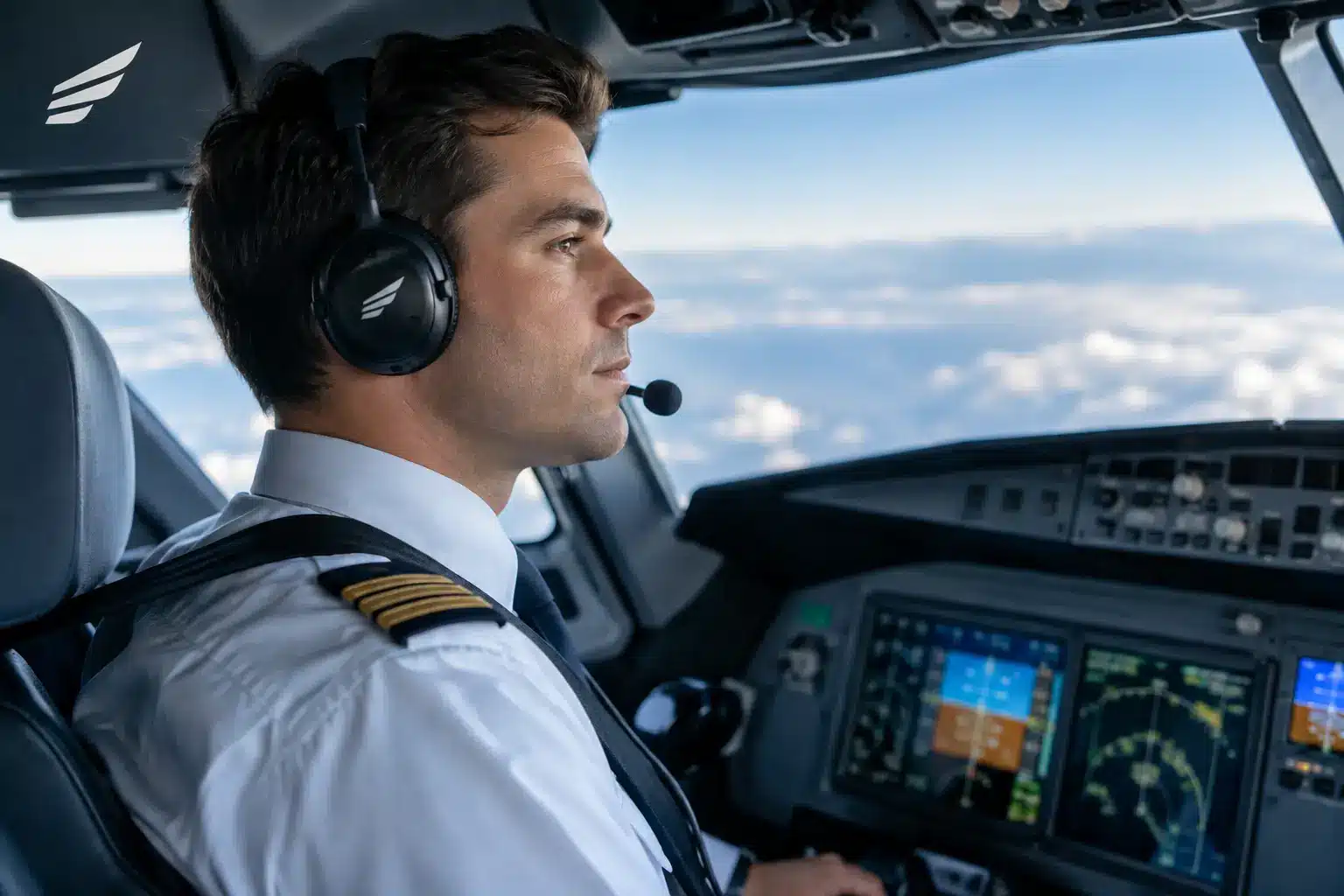
A fatigued pilot may still be highly motivated, technically capable and determined to perform well. That does not prevent slower reactions, narrower attention or a missed cue during a busy approach. Human performance ATPL turns that operational reality into knowledge you can recognise, examine and apply throughout a professional flying career.
This subject is often underestimated because it appears less mathematical than Flight Planning or Performance. In practice, it asks demanding questions: how does the body respond to altitude? Why do capable people make poor decisions under pressure? Which limitations can be managed, and which demand that a pilot steps back? The strongest ATPL students learn the detail, then connect it to realistic operational decisions.
What human performance ATPL really covers
Human Performance and Limitations, commonly shortened to HPL, examines the capabilities and constraints of the people who operate aircraft. It covers physiology, psychology, the flight deck environment and the interpersonal factors that influence safe operation. Its purpose is not to suggest that pilots are unreliable. It is to ensure they understand normal human limitations well enough to manage them systematically.
The syllabus brings together areas that can initially feel separate: the respiratory and circulatory systems, vision and hearing, sleep and fatigue, stress, workload, decision-making, communication and crew resource management. The connection is operational. A change in cabin altitude can affect physiological performance; poor sleep can reduce judgement; high workload can make a clear radio call harder to process; an ineffective challenge can allow a small error to continue.
For an airline pilot, this knowledge supports sound decisions before the aircraft moves, during routine operations and when conditions become abnormal. It also provides the language to discuss risk constructively with colleagues, rather than relying on instinct or confidence alone.
Physiology: understanding limits before they become hazards
A significant part of HPL concerns the body’s response to the aviation environment. Hypoxia is a central example. At altitude, the proportion of oxygen in the atmosphere remains broadly constant, but reduced atmospheric pressure lowers the partial pressure available for oxygen transfer in the lungs. The result can be impaired reasoning, reduced coordination and a false sense of wellbeing.
The danger is not simply knowing the definition. You need to understand why symptoms vary between individuals and why time of useful consciousness falls rapidly as altitude increases. A pilot who expects dramatic warning signs may miss more subtle changes, such as poor judgement, visual disturbance or unusual fatigue. Correct use of oxygen systems, prompt recognition and an appropriate descent are therefore practical defences, not theoretical footnotes.
Vision requires the same applied approach. The eye is highly effective, but it has limitations that matter at night and in poor visibility. Central vision, peripheral vision, dark adaptation, visual illusions and the effects of glare can all influence what a pilot believes they see. For example, a featureless approach environment may distort height perception, while a bright light can compromise night vision. Good operating procedures, instrument cross-checking and disciplined monitoring reduce the risk of acting on a misleading visual impression.
Hearing, balance and motion perception also deserve careful attention. The vestibular system can create convincing illusions during manoeuvring or when visual references are limited. The correct response is not to trust bodily sensation more firmly. It is to recognise when the senses are vulnerable and prioritise reliable instrument information.
Health, medication and fitness to operate
HPL also addresses everyday health. A minor illness, dehydration, alcohol, medication or a disrupted sleep pattern can degrade performance before a pilot feels seriously unwell. The appropriate decision depends on the circumstances, the medication involved and the nature of the operation. What matters is an honest assessment and compliance with applicable medical and operator requirements.
Professionalism includes recognising that determination is not a control measure. If a condition compromises safe performance, the responsible action may be to remove yourself from duty. That judgement protects passengers, colleagues and your own career.
Psychology: why knowledge alone is not enough
Pilots make decisions in dynamic, time-limited environments. HPL explores how attention, perception, memory and learning affect those decisions. These are not failures of intelligence. They are normal features of human cognition.
Attention is limited. When workload rises, people may fixate on one task and miss another developing issue. This is known as attentional tunnelling. A well-designed checklist, clear task allocation and active monitoring help create space to notice what has changed. Equally, automation can reduce workload in one phase while creating a different challenge: maintaining awareness of mode, aircraft energy and the wider situation.
Memory is not a recording device. Short-term memory is particularly susceptible to interruption and overload, which explains the operational value of standard operating procedures, written checks and concise briefings. These safeguards do not replace competence. They support competence when the brain is busy.
Decision-making can also be influenced by expectation and confirmation bias. If a crew expects a routine arrival, they may interpret ambiguous information in a way that supports that expectation. The practical countermeasure is deliberately seeking disconfirming evidence: What does the weather actually show? Does the aircraft state match the plan? What would make the intended approach unsuitable?
Fatigue, stress and workload in airline operations
Fatigue is one of the most relevant HPL topics because it can affect any pilot, including those who care deeply about standards. It is not solved simply by being disciplined or drinking coffee. Sleep debt, time-zone displacement, early starts, late finishes and changing rosters can all affect alertness and performance.
Students should distinguish acute fatigue from cumulative fatigue. One short night may have a noticeable effect; several restricted nights can produce a more serious performance deficit, sometimes without the individual fully recognising it. Circadian rhythm matters too. The body’s natural alertness cycle means that the same task can feel markedly different at different times of day.
Stress has a similarly nuanced role. A manageable level of pressure can sharpen focus and encourage preparation. Excessive or prolonged stress can impair concentration, communication and decision-making. The objective is not to eliminate every source of pressure. It is to identify when workload is exceeding capacity and use available resources early.
In a multi-pilot operation, those resources include the other pilot, standard calls, checklists, operational control and, where appropriate, air traffic services. Good crew resource management is not a scripted display of politeness. It is the practical use of all available information and expertise to reach a safer outcome.
How to study human performance ATPL effectively
The subject rewards understanding over rote recall. Begin by learning the required terminology accurately, particularly where definitions and physiological mechanisms are examined. Then ask a second question after each topic: what would this look like in an operation?
When studying hypoxia, consider the signs a crew might observe and the immediate priorities. When revising visual illusions, picture the approach conditions that may produce them and the instrument checks that counter them. When reviewing fatigue, relate circadian low points and sleep debt to reporting fit for duty. This approach makes the material easier to remember and more useful beyond the examination.
Question-bank practice remains valuable, but it should confirm understanding rather than become the whole study method. HPL questions may test similar principles through different scenarios, and small wording changes can alter the correct answer. Read carefully for qualifiers such as “most likely”, “initial” or “best” action.
A structured learning pathway is especially useful for students balancing ATPL theory with employment or family commitments. ASG, the premium EASA ATPL theory specialist, combines specialist-led instruction with progress monitoring and structured revision so students can identify weak areas before they become examination risks. Remote study offers valuable flexibility, but it still requires planned study blocks, regular review and timely questions to instructors when a principle is unclear.
Build revision around connections
Rather than revising each chapter in isolation, group related concepts. Link hypoxia with respiratory physiology and oxygen use. Link vision with illusions, night operations and instrument cross-checking. Link fatigue with circadian rhythm, stress, workload and crew resource management. These connections reflect how HPL works in the flight deck and make recall more reliable under exam pressure.
Keep a short error log during practice. Record not only the correct answer but why your original reasoning was wrong. Was the issue a missed keyword, confusion between similar terms or a gap in the underlying principle? That distinction helps you revise efficiently rather than repeating questions until the answer merely feels familiar.
Human performance is not a subject to set aside once the ATPL examination is complete. Each well-understood limitation becomes a practical prompt: monitor closely, communicate clearly, use procedures and intervene early. Those habits are what turn technical knowledge into dependable professional judgement.