
Becoming a professional pilot can feel overwhelming at the outset — not because of a lack of motivation, but because there are too many pathways, opinions, and misconceptions. One of the most flexible and widely misunderstood options is the modular route.
This article explains what the modular route actually is, who it suits, and — critically — what your very first steps should be if you are starting from zero.
We are talking about pilot training, not just licences.
What Is the Modular Route?
The modular route allows you to complete pilot training in clearly defined stages, at your own pace, rather than committing to a single, full-time integrated programme from day one.
In broad terms, modular training typically involves:
-
Initial flight training (PPL level)
-
Hour building
-
ATPL theory (theoretical knowledge)
-
Instrument Rating (IR)
-
Commercial Pilot Licence (CPL)
-
Multi-Engine training
-
MCC / APS MCC (multi-crew training)
These elements can be completed with different approved organisations, in different locations, and often while working or managing other commitments.
First Things First: Before You Spend Money
If you are serious about aviation but unsure where to begin, the single best first step is surprisingly simple:
Visit a Local Flying Club
Before enrolling in any formal course:
-
visit your local aerodrome
-
speak to instructors and students
-
book an introductory flight or trial lesson
This gives you:
-
real exposure to aviation culture
-
an understanding of what flying actually feels like
-
insight into training timelines and realities
No website or brochure can replace this experience.
Understanding ATPL Theory in the Modular Route
ATPL theory is often misunderstood. It is not the ATPL licence — it is the theoretical knowledge foundation required for professional pilot training under EASA.
This knowledge underpins every later stage of training, from the Instrument Rating through to airline operations.
Where ASG Fits In
ASG provides the ATPL theory portion of the modular route, delivered through:
-
remote learning
-
hybrid classrooms
-
structured progress testing
-
instructor-led, EASA-compliant delivery
Many students complete ATPL theory while flying, hour-building, or working, which is one of the key advantages of the modular pathway.
Modular Route vs Airline Cadetships
Some candidates may also be considering airline-sponsored cadet programmes, such as:
-
Aer Lingus Cadet Pilot Programme
-
Other European airline cadet schemes
These programmes:
-
are highly competitive
-
open intermittently
-
often require pre-screening or aptitude testing
If successful, they can be an excellent route. However, they are not the only route, and waiting indefinitely for a cadetship can delay progress.
Many professional pilots flying today trained modularly before cadet schemes were widespread.
What About Military Pilot Training?
Another distinct pathway is the Military Air Corps cadetship, which trains pilots for military operations rather than civilian airline roles.
Key differences:
-
selection criteria are military-specific
-
training is operationally focused
-
career outcomes differ significantly
For some individuals, this route aligns perfectly with their goals. For others, civilian modular training is more appropriate.
The important point is clarity: military and civilian pathways are not interchangeable, and each requires informed commitment.
Self-Funded Modular Training: What to Know
Modular training is typically self-funded, which requires careful planning.
Good practice includes:
-
understanding realistic timelines
-
avoiding rushing early stages
-
planning ATPL theory alongside flight training
-
budgeting for contingencies
Crucially, modular training allows you to pause, reassess, and adapt, which is not always possible in fully integrated programmes.
Common Mistakes at the Start
Some avoidable errors we frequently see:
-
committing to a full programme before understanding the pathway
-
focusing on licences rather than competence
-
underestimating the importance of ATPL theory
-
delaying engagement with real aviation environments
The modular route rewards informed, methodical progression, not speed.
The Big Picture
There is no single “correct” way to become a pilot.
The right route depends on:
-
finances
-
personal circumstances
-
learning style
-
long-term career goals
The modular route remains one of the most flexible and proven pathways into professional aviation — provided it is approached with realism, structure, and good advice.
Final Thought
If you are starting out and unsure where to begin:
-
Go to your local flying club
-
Get airborne once
-
Speak to people already in training
-
Learn the structure before committing financially
Aviation rewards preparation — both in the air and on the ground.
About the Author
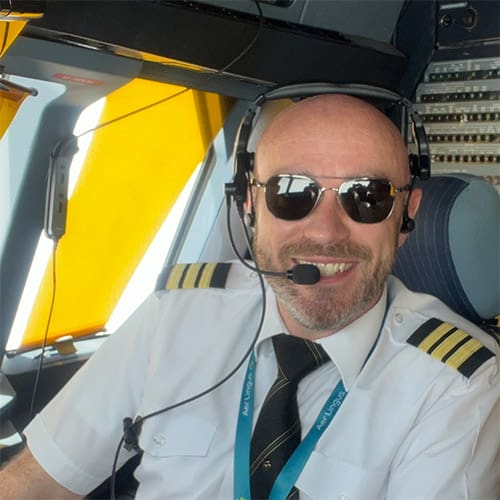
Diarmuid O’Riordan
Air Traffic Controller, airline pilot, and aviation educator.
Founder of ASG, an EASA Approved Training Organisation specialising in ATPL theory and modern training delivery.